Summer has officially settled into West Houston, and so has the sneezing. Between rising humidity, early heat, and the start of hurricane season, many residents are already reaching for tissues, allergy meds, and eye drops.
While allergies can hit anywhere in the city, some neighborhoods consistently experience tougher seasons than others — especially areas with dense trees, heavy humidity, or frequent flooding.
Here’s what’s floating around West Houston’s air this week, and what you can do to protect your home, your cubicle, and your sinuses.
Why Allergies Hit Houston Harder
Houston’s subtropical climate allows plants to grow nearly year‑round, creating extended pollen seasons and keeping mold and dust mites active long after spring ends. Heavy rains — especially during hurricane season — can also increase mold growth indoors and outdoors.
This year’s warmer temperatures may be making symptoms worse by lengthening growing seasons and boosting pollen production. For many residents, Houston allergies feel less like a season and more like a year‑round reality.
West Houston Allergy Hot Spots
Memorial & Energy Corridor
Mature trees, lush green spaces, and high humidity make this area beautiful — and challenging for allergy sufferers. Tree pollen lingers, and humidity encourages mold growth in yards, parks, and even older buildings.
Westchase & Alief
These neighborhoods sit between major green corridors and bayous. Rain can temporarily knock pollen down, but standing water and moisture can increase mold spores, especially around low‑lying areas and older complexes.
Meyerland & Braeswood/Braeburn
Bayou‑adjacent communities often deal with repeated flooding. Mold spores become a major trigger after storms or prolonged wet weather, both inside homes and in nearby green spaces.
North Houston (Spring, The Woodlands, Kingwood)
Dense tree canopies mean higher exposure to oak, ash, elm, and pecan pollen — especially in early summer. Residents here often feel the impact of tree pollen before the rest of the city.
What’s Floating Around Houston This Week
Based on current pollen tracking, common Houston allergies this week include:
- Grass pollen — high
- Mold spores — high
- Dust mites — year‑round
- Tree pollen — moderate but lingering
- Humidity‑driven allergens — elevated
If you’re sneezing indoors as much as outdoors, your AC filter may be part of the problem.
Indoor Allergies Are Rising Too
Houston’s humidity doesn’t just affect the outdoors — it impacts indoor air quality in apartments, homes, and offices across West Houston.
Common indoor triggers include:
- Dirty or clogged AC filters
- Mold in vents or around windows
- Dust mites in carpets and upholstery
- Pet dander in small spaces
- Poor air circulation in older buildings
If your symptoms get worse inside — especially at home or in your cubicle — it may be time to check your air filter and overall indoor air quality.
For example, after living in an apartment for almost a full year, I discovered I didn’t have an air filter in the air conditioner vent at all. The air in my apartment had been steadily declining, and I had no idea why until I checked. In many West Houston apartments, filters aren’t changed as often as residents think. This writer learned the hard way. But that won’t happen to you, because a quick check can make a noticeable difference in any symptoms you might experience.
How to Fight Back (West Houston Edition)
Small changes can make a big difference during peak Houston allergy months. Experts often recommend:
- Monitoring daily pollen forecasts
- Keeping windows closed on high‑pollen days
- Showering and changing clothes after being outdoors
- Running your AC with clean filters
- Using a HEPA purifier in bedrooms or cubicles
- Addressing moisture quickly to prevent mold growth
For renters, one of the most overlooked steps is simply checking the AC filter — and knowing when it needs to be replaced.
Need Help Checking Your AC Filter?
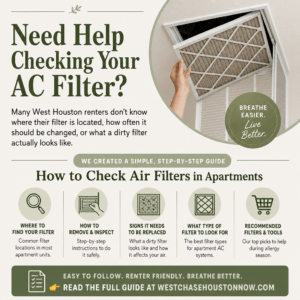
How to Check Air Filters in Apartments
When to See a Specialist
If symptoms persist, worsen indoors, or include wheezing or shortness of breath, consider visiting:
- An allergist
- An ENT specialist
- Urgent care
- Your primary care provider
Early treatment can prevent symptoms from escalating during peak humidity and storm season.
Bottom Line
Summer in West Houston means pool days, outdoor events, and hurricane prep — but it also means allergy season isn’t taking a break anytime soon.
With better awareness of local Houston allergy hot spots, a clean AC filter, and a few smart habits, you can make your home or apartment a little easier to breathe in this summer.